Category

Finance & Markets

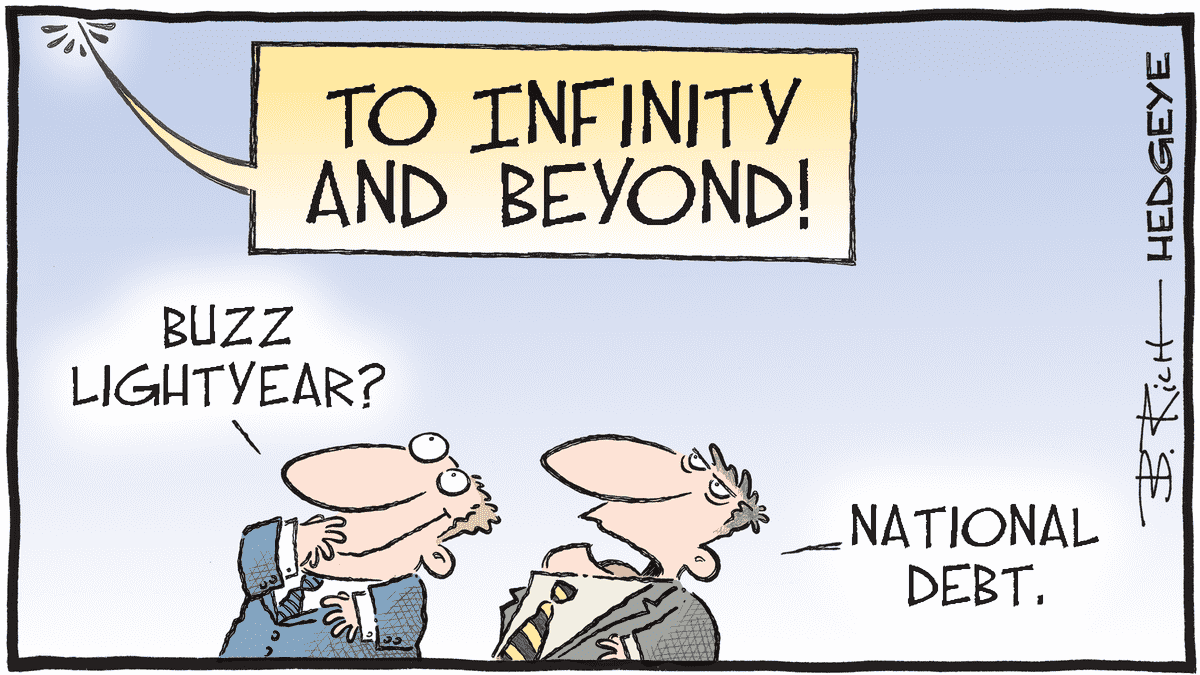
Why the U.S. Public Debt Is Unsustainable and It Is Destroying The Middle Class

By | Finance & Markets | No Comments

In a recent tweet, a talented financial analyst and investor stated: “The “debt is unsustainable” narrative has been around for 40 years plus. What’s astonishing to me is how the people who push this narrative never ask themselves, “Why has it been sustainable for so long?”.

There is a widespread idea that the fiscal imbalances of a world reserve currency issuer would end in an Argentina-style bankruptcy. However, the manifestation of unsustainability did not even appear as drastic in Argentina itself. Hey, Argentina continues to exist, doesn’t it?

Excessive public debt is unsustainable when it becomes a burden on productive growth and leads the economy to constantly rising taxes, weaker productivity growth, and weaker real wage growth. However, the level of unsustainable accumulation of debt may continue to rise because the state itself imposes public debt on banks’ balance sheets and the state forces the financial sector to take all its debt as the “lowest risk asset.” However, law and regulation have merely imposed and forced this construct. Rising debt bloats the government’s size in the economy and erodes its growth and productivity potential.

Many diabetic and obese people continue to eat too much unhealthy food, thinking nothing has happened so far. That does not mean their eating habits are sustainable.

Those who ignore the accumulation of public debt tend to do so under the idea that nothing has happened yet. This is a reckless way of looking at the economy, a sort of “we have not killed ourselves yet; let us accelerate” mentality.

An ever-weaker private sector, weak real wages, declining productivity growth, and the currency’s diminishing purchasing power all indicate the unsustainability of debt levels. It becomes increasingly difficult for families and small businesses to make ends meet and pay for essential goods and services, while those who already have access to debt and the public sector smile in contentment. Why? Because the accumulation of public debt is printing money artificially

When money is created in the private sector through the financial system, there is a process of wealth creation and productive money creation. The financial system creates money for projects that yield a genuine economic return. Some fail, others soar. That is the process of productive economic growth and progress. Only when the central bank manipulates interest rates, disguises the cost of risk, and increases the money supply to monetize unproductive deficit spending can it distort this process.

Private banks in an open economy create money to accelerate progress and free-floating interest rates limit the accumulation of unproductive and dangerous risk. When the central bank wants to disguise the worsening solvency of fiscally imprudent governments, it does so by tampering with interest rates—making fiscally irresponsible governments’ borrowing cheaper—and artificially increasing the amount of currency in the system, monetizing public debt—a destructive process of money creation as opposed to the saving-investment function of banking.

When the fiscal position is unsustainable, the only way for the state to force the acceptance of its debt—newly created currency—is through coercion and repression.

A state’s debt is only an asset when the private sector values its solvency and uses it as a reserve. When the state imposes its insolvency on the economy, its bankruptcy manifests in the destruction of the purchasing power of the currency through inflation and the weakening of real wage purchasing capacity.

The state basically conducts a process of slow default on the economy through rising taxes and weakening the purchasing power of the currency, which leads to weaker growth and erosion of the middle class, the captive hostages of the currency issuer.

Of course, as the currency issuer, the state never acknowledges its imbalances and always blames inflation and weak growth on the private sector, exporters, other nations, and markets. Independent institutions must impose fiscal prudence to prevent a state from destroying the real economy. The state, through the monopoly of currency issuance and the imposition of law and regulation, will always pass on its imbalances to consumers and businesses, thinking it is for their own good.

The government deficit is not creating savings for the private economy. Savings in the real economy accept public debt as an asset when they perceive the currency issuer’s solvency to be reliable. When the government imposes it and disregards the functioning of the productive economy, positioning itself as the source of wealth, it undermines the very foundation it purports to protect: the standard of living for the average citizen.

Governments do not create reserves; their debt becomes a reserve only when the productive private sector economy within their political boundaries thrives and the public finances remain under control. The state does show its insolvency, like any issuer, in the price of the I.O.U. it distributes, i.e., in the purchasing power of the currency. Public debt is artificial currency creation because the state does not create anything; it only administers the money it collects from the same productive private sector it is choking via taxes and inflation.

The United States debt started to become unsustainable when the Federal Reserve stopped defending the currency and paying attention to monetary aggregates to implement policies designed to disguise the rising cost of indebtedness from unbridled deficit spending.

Artificial currency creation is never neutral. It disproportionately benefits the first recipient of new currency, the government, and massively hurts the last recipients, real wages and deposit savings. It is a massive transfer of wealth from the productive economy and savers to the bureaucratic administration.

More units of public debt mean weaker productive growth, higher taxes, and more inflation in the future. All three are manifestations of a slow burn default.

So, if the state can impose its fiscal imbalances on us, how do we know if the debt it issues is unsustainable? First, because of the units of GDP created, adding new units of public debt diminishes rapidly. Second, the erosion of the currency’s purchasing power persists and accelerates. Third, because productive investment and capital expenditure decline, employment may remain acceptable in the headlines, but real wages, productivity, and the ability of workers to make ends meet deteriorate rapidly.

Today’s narrative tries to tell us that nothing has happened when a lot has. The destruction of the middle class and the deterioration of the small and medium enterprise fabric in favor of a rising bureaucratic administration that consumes higher taxes but still generates more debt and deficits It does end badly. And all empires end the same way, with the assumption that nothing will happen. The currency’s acceptance as a reserve does come to an end. The persistent erosion of purchasing power and declining confidence in the legally imposed “lowest risk asset” are some of the red flags some are willing to ignore, maybe because they live off other people’s taxes or because they benefit from the destruction of the currency through asset inflation. Either way, it is profoundly anti-social and destructive, even if it is a slow detonation.

The fact that there are informed and intelligent investors who willingly ignore the red flags of weakening the middle class, declining purchasing power of the currency and deteriorating solvency and productivity shows why it is so dangerous to allow governments to maintain fiscal imprudence. The reason why government money creation is so dangerous is because the government is always happy to increase its power over citizens and blame them for the problems its policies create, presenting itself as the solution.

Can debt continue to rise? Of course. The gradual process of impoverishment and serfdom is relatively comfortable when the state can impose the use of the currency and force its debt into your pension by law and regulation. To think that it will last forever, and nothing will happen is not just reckless “accelerate, we have not crashed yet” mentality. It is ignoring the reality of money. Independent money, gold, and similar, solve this.


 

Easing In The Middle Of Persistent Inflation May Worsen Stagflation Risk

By | Finance & Markets | No Comments

Thirty major central banks are expected to cut rates in the second half of 2024, a year when more than seventy nations will have elections, which often means massive increases in government spending. Additionally, the latest inflation figures show stubbornly persistent consumer price annualized growth.

In the United States, headline PCE inflation in February will likely grow by 0.4%, compared with a 0.3% rise in January, and consensus expects a 2.5% annualized rate, up from 2.4% in January. This is on top of the already 20% accumulated inflation of the past four years. Core inflation will likely show a 0.3% gain, according to Bloomberg Economics, which means an annualized 2.8%, building on top of the price increases of the past years

Thirty central banks easing and seventy national governments increasing spending in an election year means more fuel for the inflation fire in a year in which money supply growth has bounced significantly from its 2023 lows.

Central banks ignored monetary aggregates when they shrugged off the risk of inflation in 2020, and now they are, again, easing way too fast when the battle against inflation has not finished. Furthermore, the only real tool that central banks have used is hiking rates, because different parallel measures of money growth, including reverse repo liquidity injections, have kept money supply growth at an elevated rate even when the balance of the G7 central banks was moderating, albeit at a slower pace than announced.

Cutting rates may come too late because, by the time it is implemented, it will cause a double negative. Government deficits will be cheaper to refinance, bloating an already record-high public debt yet again, but those cuts may have little impact on small and medium enterprises and families because they suffer significantly more from the accumulated effects of inflation, which means weaker margins, more difficulties to make ends meet, and impoverishment.

We must also remember that these persistent levels of official inflation come after relevant tweaks in the calculation of the consumer price index.

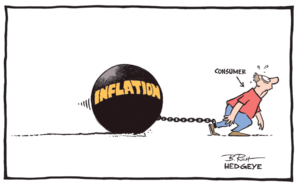
We certainly know one thing: consumers do not pay attention to the annualized rate of growth in prices, but to the accumulated level of destruction of their purchasing power, and everyone, from Europeans to Americans, knows that they have become artificially poorer by the insane fiscal and monetary policies implemented in 2020.

Nobody who takes inflation seriously would even consider easing in an election year, adding trillions of dollars of deficit spending to the fire of inflation. Furthermore, the history of inflation warns us about giving up easily and too fast.

The Fed is making a big mistake by cheering the headline economic figures that come from disguising a private sector recession with a massive increase in public debt and weakening employment figures embellished by temporary jobs and public sector hiring. Additionally, it is making a mistake by giving dovish signals that make market participants take more risk. There has been no relevant reduction in the money supply if we include the different layers of liquidity injections. Announcing forthcoming rate cuts will certainly make speculative debt rise but will hardly change the credit demand from the backbone of the economy, small businesses, and families. Since the US government has rejected any calls for normalization and instead added more deficits and debt as if rising bond yields were not a problem, citizens and businesses have already suffered greatly from ongoing inflation and rate increases. As such, the rate cuts will help an already bloated government spending and the zombie corporations that keep access to capital markets. Everyone else will be hurt both ways, with inflation and lower access to credit.

You may think all the above problems are policy mistakes, but they are not. This is a slow process of nationalizing resources. Inflation and artificial money creation through deficits and monetization are a gradual transfer of wealth from real salaries and deposit savings to the government. You are basically becoming poorer to sustain an ever-increasing government size. The next time you read that massive deficits and monetary easing are good policies for the middle class, ask yourself why you find it harder each year to pay for goods and services. The mistakes made in 2020–2024 will cost the middle class many more taxes, even if the government promises it will only be “taxes on the rich,” the oldest gimmick to raise your taxes.

More taxes, persistent inflation, the hidden tax, and the loss of value of your wages. That is “easing” for you. A private sector recession with headline economic figures bloated by government debt. The recipe for stagflation.


Massive Money Printing Will Accelerate as Debt Soars

By | Finance & Markets | No Comments

The U.S. federal government published a December deficit of $129 billion, up 52% from the previous year. The private sector recession is clear as expenses continue to rise while tax receipts decline. If we look at the period between October and December 2023, the deficit ballooned to a staggering $510 billion.

You may remember that the Biden administration expected a significant deficit reduction from its tax increases and the expected benefits of its Inflation Reduction Act.

What Americans got was a massive deficit and persistent inflation. According to Moody’s chief economist, Mark Zandi, the entire disinflation process seen in the past years comes from exogenous factors such as “fading fallout from the global pandemic on global supply chains and labor markets, and the Russian War in Ukraine and the impact on oil, food, and other commodity prices.” The complete disinflation trend follows the slump in money supply (M2), but the Consumer Price Index (CPI) should have fallen faster if deficit spending, which means more consumption of newly created currency, would have been under control. December was disappointing and higher than it should have been.

The United States annual CPI (+3.4%) came above estimates, proving that the recent bounce in money supply and rising deficit spending continue to erode the purchasing power of the currency and that the base effect generated too much optimism in the past two prints. Most prices rose in December, and only four items fell. In fact, despite a large decline in energy prices, annual services (+5.3%), shelter (+6.2%), and transportation services (+9.7%) continue to show the extent of the inflation problem.

The massive deficit means more taxes, more inflation, and lower growth in the future.

The Congressional Budget Office (CBO) expects an unsustainable path that still leaves a 5.0% deficit by 2027, growing every year to reach a massive 10.0% of GDP in 2053 due to a much faster growth in spending than in revenues. The enormous increase in debt will also lead to extremely poor growth, with real GDP rising much slower throughout the 2023–2053 period than it has, on average, “over the past 30 years.”

Deficits are not a tool for growth; they are tools for stagnation.

Deficits mean that the currency’s purchasing power will continue to vanish with money printing and that the real disposable income of Americans will be demolished with a combination of higher taxes and a weaker real value of their wages and deposit savings.

We must remember that, in Biden’s administration’s own estimates, the accumulated deficit will reach $14 trillion in the period to 2032.

This unsustainable level of fiscal irresponsibility will also lead to more massive money printing. The Federal Reserve will have to lead with larger federal fiscal imbalances than seen in crisis times, even considering estimates that assume no recession or crisis. So, if a crisis hits, the situation will simply explode.

Considering all these elements, it is not difficult to think of a Fed balance sheet that rockets from an already elevated 29% of GDP to fifty percent, and it will still be lower than the ECB’s balance sheet!

Readers may think that monetization of debt will be an uncomfortable but necessary measure to reduce indebtedness. However, we should have learned by now that Federal Reserve monetization only makes governments more fiscally imprudent. Public debt continues to reach new record highs both in periods of monetary expansion and in periods of alleged contraction.

2023 proved that central banks’ policy was only restrictive in name, as net liquidity injections and anti-fragmentation programs continued. Policy was restrictive for the private sector, especially small and medium enterprises, and families, not for governments.

2024 will be even worse because the government will not count on rising receipts and a doped economic recovery. Therefore, deficits are likely to surprise negatively again, which means more taxes and lower potential growth disguised with a new set of liquidity injections.

What does this mean for savers? Your US dollars will be worth less, real wages will continue to show poor growth, and, after tax, disposable income will decline. The only way to protect yourself is to find alternative real reserves of value, from gold to bitcoin, which will offset the monetary destruction that is about to accelerate.

Taxing Billionaires Won’t Reduce Taxes For The Middle Class

By | Finance & Markets | No Comments

Article published in ZeroHedge

In a world of populist policies, the notion of taxing billionaires to alleviate the financial burdens of the middle class stands as a tempting narrative. Advocates tout it as the quintessential solution to income inequality, promising a redistribution of wealth that lifts the masses from their fiscal woes. However, this narrative, so alluring in its simplicity, crumbles upon closer examination, revealing a multitude of complexities and pitfalls that belie its benefits

Central to the fallacy of taxing billionaires lies a fundamental misunderstanding of the dynamics of government spending and deficits. Proponents of this approach often overlook the inconvenient truth that as most governments increase spending even when tax receipts rise, deficits soar to unprecedented heights, burdening future generations with a mountain of debt and always increasing taxes for the middle class.

Taxing the rich is the door that leads to more taxes for all of us. The case of the United States is evident. No tax revenue measure is going to wipe out an annual two trillion dollar deficit. Therefore, the government announces a large tax hike for the wealthy and disguises it with more taxes for everybody and higher inflation, which is a hidden tax.

The notion that taxing billionaires will miraculously alleviate this fiscal strain is akin to applying plaster to a gaping wound—it does not even provide temporary relief, and it fails to address the underlying malaise.

A seminal paper by Alesina, Favero, and Giavazzi (2015) delves into the implications of government deficits on economic growth. The authors argue that persistent deficits not only crowd out private investment but also lead to higher interest rates, reduced confidence, and ultimately diminished economic growth. This underscores the importance of fiscal prudence in addressing long-term fiscal challenges and the evidence that tax hikes are not neutral.

Billionaires mostly hold their wealth in shares of their own companies. This is what is called “paper wealth.” However, they cannot sell those shares and if they lost them, their value would decline immediately.

The redistribution fallacy comes from three false ideas:

  • The first is the notion that billionaires do not pay taxes to begin with. The top one percent of income earners in the United States earned 22 percent of all income and paid 42 percent of all federal income.
  • The second error is believing that wealth is static—like a pie—and can be redistributed at will. Wealth is either created or destroyed. Confiscating the wealth of billionaires does not make the middle class or the poor richer. We should have learned that lesson from the numerous examples in history, from the French Revolution to the Soviet Union.
  • The third mistake is to believe that the economy is a sum-zero game where the wealth of one person is the loss of another. That is simply false because wealth is not “there.” It must be created through an exercise where all parties win in exchange for cooperation.

The world must strive to create more wealth, not limit those who generate it.

Consider the recent clamour for increased government intervention and spending, particularly in the wake of global crises. For instance, the COVID-19 pandemic prompted governments all over the world to enact a flurry of fiscal stimuli, ostensibly intended to soften the blow of the economic fallout. Yet, as the dust settles, we find ourselves grappling not only with the immediate ramifications of increased government spending but also with the long-term consequences of ballooning deficits as well as persistent inflation.

Who came out as the loser of the redistribution and stimulus frenzy of the past decade? The middle class. It has been destroyed by persistent inflation created by printing money without control, rising debt and deficits and constantly bloating government size in the economy, which in turn creates two taxes for the middle class and the poor: inflation and rising indirect taxes.

Critics of this approach have long warned of the dangers of irresponsible government spending. Taxing billionaires will not stop this trend of excessive bureaucracy and irresponsible administration of public services; in fact, it may accelerate it, as we have seen in so many countries, and certainly will not reduce the tax wedge on ordinary citizens.

History is replete with cautionary tales of nations brought to their knees by unchecked fiscal excesses. From hyperinflation to sovereign debt crises, the ramifications of fiscal irresponsibility are manifold and far-reaching. And yet, in the face of mounting pressure to “tax the rich,” policymakers seem intent on repeating the mistakes of the past, heedless of the inevitable consequences.

But the fallacy of taxing billionaires extends beyond the realm of fiscal policy—it strikes at the very heart of economic prosperity. At its core, capitalism depends on investment, entrepreneurship, and innovation—all of which are at risk from excessive taxation. The narrative that vilifies billionaires as greedy hoarders of wealth overlooks their crucial role in driving economic growth and prosperity.

By focusing solely on redistributive measures, policymakers risk undermining the very foundations of prosperity upon which our economic system rests

Moreover, the notion that taxing billionaires will somehow level the playing field and uplift the middle class is predicated on a flawed understanding of economic reality. In truth, the global mobility of capital renders such measures largely ineffective, as the ultra-wealthy can easily relocate to jurisdictions with more favourable tax regimes. This not only undermines the efficacy of taxing billionaires as a revenue-generating mechanism but also exacerbates the very inequalities it seeks to redress.

Indeed, the unintended consequences of excessively taxing the rich are manifold and far-reaching. From reduced investment and job creation to economic stagnation and decline, the repercussions of such policies are felt across society. And while the rhetoric of wealth redistribution may sound appealing in theory, the reality is far more sobering—a stagnant economy, diminished opportunities, and a dwindling standard of living for all.

So, where does this leave us? If taxing billionaires is not the panacea it purports to be, what alternatives exist to address income inequality and alleviate the burdens of the middle class? The answer lies not in punitive taxation but in prudent fiscal policy, targeted policies, and a renewed focus on fostering economic growth and prosperity for all.

Primarily, we must recognize that fiscal responsibility is not a luxury but a necessity. Governments must exercise restraint in their spending, prioritize efficiency and accountability, and resist the temptation to paper over fiscal deficits with ill-conceived tax hikes and money printing. Only through disciplined fiscal management can we hope to secure a prosperous future for generations to come.

Second, we must recognize the vital role that entrepreneurship and investment play in driving economic growth and prosperity. Rather than demonizing billionaires as the root of all evil, we should celebrate their contributions to society and create an environment that fosters innovation, entrepreneurship, and wealth creation. This means reducing regulatory barriers, incentivizing investment, and empowering individuals to pursue their entrepreneurial ambitions.

Finally, we must understand that opportunities provided to citizens, not the size of the government, are what define true progress. Rather than relying on the state to solve all our problems, we should empower individuals and communities to chart their own course to prosperity. This means investing in education, healthcare, and infrastructure, providing a safety net for those in need, and fostering a culture of self-reliance and personal responsibility.

In conclusion, the fallacy of taxing billionaires lies not in its intentions but in its execution. While the notion of redistributing wealth may sound appealing in theory, the reality is far more complex. By succumbing to the allure of punitive taxation, we risk stifling economic growth, undermining prosperity, and perpetuating the very inequalities we seek to redress. Only through prudent fiscal management, targeted interventions, and a renewed focus on fostering economic growth can we hope to build a future that is truly prosperous for all.

Socialism does not redistribute from the rich to the poor, but from the middle class to politicians.

The fallacy of massively taxing billionaires is another trick to promote socialism, which has never been about the redistribution of wealth from the rich to the poor, but the redistribution of wealth from the middle class to politicians.


Massive Money Printing Will Accelerate as Debt Soars

By | Finance & Markets | No Comments

The U.S. federal government published a December deficit of $129 billion, up 52% from the previous year. The private sector recession is clear as expenses continue to rise while tax receipts decline. If we look at the period between October and December 2023, the deficit ballooned to a staggering $510 billion.

You may remember that the Biden administration expected a significant deficit reduction from its tax increases and the expected benefits of its Inflation Reduction Act.

What Americans got was a massive deficit and persistent inflation. According to Moody’s chief economist, Mark Zendi, the entire disinflation process seen in the past years comes from exogenous factors such as “fading fallout from the global pandemic on global supply chains and labor markets, and the Russian War in Ukraine and the impact on oil, food, and other commodity prices.” The complete disinflation trend follows the slump in money supply (M2), but the Consumer Price Index (CPI) should have fallen faster if deficit spending, which means more consumption of newly created currency, would have been under control. December was disappointing and higher than it should have been.

The United States annual CPI (+3.4%) came above estimates, proving that the recent bounce in money supply and rising deficit spending continue to erode the purchasing power of the currency and that the base effect generated too much optimism in the past two prints. Most prices rose in December, and only four items fell. In fact, despite a large decline in energy prices, annual services (+5.3%), shelter (+6.2%), and transportation services (+9.7%) continue to show the extent of the inflation problem

The massive deficit means more taxes, more inflation, and lower growth in the future.

The Congressional Budget Office (CBO) expects an unsustainable path that still leaves a 5.0% deficit by 2027, growing every year to reach a massive 10.0% of GDP in 2053 due to a much faster growth in spending than in revenues. The enormous increase in debt will also lead to extremely poor growth, with real GDP rising much slower throughout the 2023–2053 period than it has, on average, “over the past 30 years.”

Deficits are not a tool for growth; they are tools for stagnation.

Deficits mean that the currency’s purchasing power will continue to vanish with money printing and that the real disposable income of Americans will be demolished with a combination of higher taxes and a weaker real value of their wages and deposit savings.

We must remember that, in Biden’s administration’s own estimates, the accumulated deficit will reach $14 trillion in the period to 2032.

This unsustainable level of fiscal irresponsibility will also lead to more massive money printing. The Federal Reserve will have to lead with larger federal fiscal imbalances than seen in crisis times, even considering estimates that assume no recession or crisis. So, if a crisis hits, the situation will simply explode.


Navigating the Economic Landscape in 2024

By | Finance & Markets | No Comments

Article originally published in Tomorrow’s Affairs

As we embark on the year 2024, the economic landscape is characterized by a blend of factors, including declining but still elevated inflation, potential interest rate cuts, increasing geopolitical risks, and soaring public debt.

The final quarter of 2023 witnessed a remarkable improvement in market sentiment. The moderation of inflation, strong corporate profits that exceeded expectations, and optimism regarding impending rate cuts all contributed to this surge.

The heightened complacency, evident in the “extreme greed” levels on the CNN Greed and Fear Index, resulted from aggressive rate reduction expectations by central banks and projections of a swift decline in inflation. However, as we move into 2024, parallels with the preceding year become apparent.

Contrary to market expectations, a “soft landing” is not enough to bring about the anticipated year of disinflation; a recession is the necessary catalyst.

An abrupt increase in the global money supply, standing at nearly $107 trillion by the end of the year, remained a bulwark against a recession in 2023, coupled with relentless government spending.

A lag effect

The contrast between alleged tight monetary policy and active fiscal measures has placed the entire negative impact on the private sector, bearing the brunt of rate hikes and declining monetary aggregates.

A manufacturing sector that remains in deep contraction is joined by a services sector that sees how consumers have almost depleted their savings for 2021.

Although inflation declined alongside monetary aggregates, the economic repercussions have been delayed due to a lag effect.

The full-scale impact of the 2023 monetary contraction is expected to manifest in 2024

The full-scale impact of the 2023 monetary contraction is expected to manifest in 2024, leading to a decline in inflation if the economy falters and private sector demand recedes.

However, the notion of a quick slump in inflation with no impact on growth or jobs appears increasingly implausible. Additionally, a looser monetary policy may contribute to commodities rebounding, attracting freshly printed money towards unconventional assets, and making the inflation decline more challenging.

The impact of debt and public spending remains a critical consideration. Will central banks uphold market support? How will taxes and macroeconomic factors shape the global economy? These questions underscore the delicate balance between recovery and potential risks.

A year of stagnation

In 2024, a prudent investment policy is recommended. Central banks are expected to maintain accommodative policies, injecting liquidity selectively. However, anticipated interest rate reductions may not be as significant as expected.

The global economy enters 2024 with less uncertainty. Geopolitical risks seem to have been discounted, and this may be a sign of excessive optimism in a year where global growth is projected to slow markedly, while the Eurozone and Latin America may continue to show worse growth than their counterparts.

2024 will likely be a year of stagnation with elevated public debt

Strong China and India growth will not likely change the weak trend of productivity and growth generated in most developed and emerging economies after years of debt-fueled government spending programs.

2024 will likely be a year of stagnation with elevated public debt. Thus, the expected quantitative tightening is likely to be less severe with a rising global money supply and improved credit conditions.

A risky environment for fiat currencies is anticipated, with ongoing destruction of the purchasing power of the domestic currencies as governments continue to increase their fiscal imbalances.

Gold and bitcoin may help citizens avoid the debasement of currencies without ignoring the large difference in volatility of each asset class.

Global loss of purchasing power is likely to continue even with declining annual rates of rise in consumer prices, with expected global inflation between 3.5% and 4%

Expectations of large rate cuts and even quantitative easing from the Federal Reserve may be too optimistic. In a U.S. election year, substantial changes in monetary policy are not anticipated.

As such, global demand for dollars is expected to rise, creating a favorable environment for dollar-denominated assets.

Numerous risks cast shadows on the economic horizon, including more persistent inflation, unanticipated impacts on business margin and profits, potential currency depreciation in emerging markets, the ongoing China-USA trade conflict, the war in Ukraine and Israel generating widespread geopolitical risk, and the spectre of a black swan event in the debt market causing a credit crunch.

2024 is likely to be very similar to 2023. The long-term trends of weak productivity and GDP growth, high debt, rising government size in major economies, increases in taxes, and erosion of the purchasing power of salaries and savings will continue.

Equities may react positively to looser monetary policy, but the macroeconomic path to stagnation remains.